In the airline industry, an ADM (Agency Debit Memo) is issued by airlines to travel agencies to recover losses caused by errors, policy violations, or misuse of booking systems. Understanding the common reasons behind ADMs is essential to avoid financial penalties and maintain a good relationship with airlines.
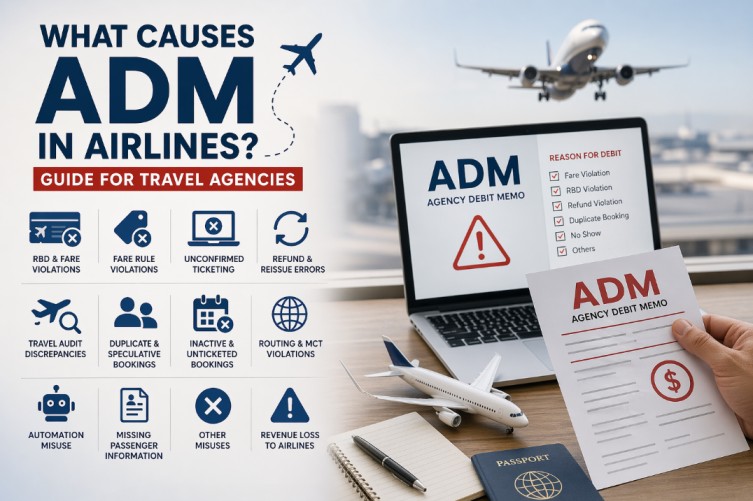
1. Reservation Booking Designator (RBD) Violations
An RBD violation occurs when there is a mismatch between the booking class in the reservation and the class shown on the issued ticket. This inconsistency can lead to incorrect pricing and triggers an ADM.
2. Fare and Sales Rule Violations
Airlines enforce strict fare rules. Violations may include:
- Ignoring advance purchase requirements
- Violating minimum or maximum stay conditions
- Incorrect travel or sale dates
- Misapplication of discounts (child, infant, or promotional fares)
- Under-collection of fares, taxes, or surcharges
- Invalid routing or airline combinations
Any breach of fare conditions can result in a debit memo.
3. Ticketing Without Confirmed Booking
Issuing a ticket on an unconfirmed or waitlisted segment is a violation when confirmation is required.
4. Refund and Reissue Violations
Incorrect handling of refunds or ticket reissues, including duplicate refunds or invalid recalculations, is a common cause of ADM.
5. Travel Audit Discrepancies
Airlines may compare the ticketed itinerary with the actual flown itinerary. Differences in routing, booking class, or travel dates can lead to penalties.
6. Duplicate or Excessive Bookings
Creating multiple bookings for the same passenger, or repeatedly cancelling and rebooking the same flight (churning), is considered system abuse.
7. Fictitious or Speculative Bookings
Bookings made with fake passenger names or without real intent to travel—often to block inventory—are strictly prohibited.
8. Inactive or Unticketed Bookings
Failure to cancel or ticket bookings within the required timeframe (usually before departure) may result in ADM charges.
9. Origin & Destination (O&D) and MCT Violations
Manipulating booking logic to bypass system controls or violating Minimum Connecting Time (MCT) rules can trigger penalties.
10. Passive Booking Misuse
Passive segments should only be used for ticketing purposes. Leaving them active without ticketing or cancellation is a violation.
11. Cross-Border and Back-to-Back Ticketing
These practices are used to bypass fare rules and are closely monitored by airlines.
12. Excessive Ticket Voids
High volumes of voided tickets may indicate poor control or misuse, leading to financial loss for airlines.
13. Use of Automation Scripts
Using robotic scripts or macros in GDS systems to manipulate availability or bookings is prohibited.
14. Missing Passenger Information
Incomplete passenger contact details (phone, email) can also result in ADM issuance.
Conclusion
ADMs are preventable if travel agencies strictly follow airline rules, maintain accurate bookings, and ensure compliance with fare conditions. Proper training and monitoring of booking practices are key to avoiding unnecessary penalties.
By understanding these common violations, agencies can protect their revenue and maintain professional standards in airline ticketing.
Read Also
How to add contact details in Amadeus, Galileo, Sabre
How to Master Amadeus Encode & Decode Commands