NDC vs GDS: The Complete Comparison for Travel Professionals
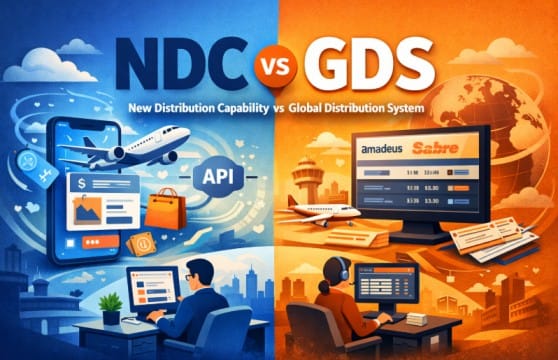
NDC vs GDS are two major airline distribution systems that every travel professional should understand. Over the past decade, the way airlines sell tickets and ancillary services has changed dramatically.
Where GDS used to be the single channel for airline inventory, NDC has emerged as a modern, airline-controlled standard that gives carriers more flexibility and control over how their products are sold.
This guide breaks down both systems — what they are, how they differ, and how they complement each other in today’s travel marketplace.
What Is NDC?
NDC (New Distribution Capability) is a modern data transmission standard developed by the International Air Transport Association (IATA). It allows airlines to distribute their products directly to travel sellers using XML-based technology.
Unlike traditional distribution models, NDC enables airlines to:
- Offer dynamic pricing — fares can be adjusted in real time
- Sell ancillary services (bags, seats, meals) more effectively
- Personalize offers based on customer data
- Provide richer content (images, branding, fare families)
In simple terms, NDC gives airlines more control over how their products are displayed and sold.
What Is GDS?
A GDS (Global Distribution System) is a centralized booking network that connects travel agencies with airlines, hotels, and other suppliers.
The three major GDS providers are:
- Amadeus
- Sabre
- Travelport (Galileo / Worldspan)
For decades, GDS platforms have been the backbone of airline distribution. They aggregate content from multiple airlines and allow agents to compare schedules, fares, and availability in one place.
Key Differences Between NDC vs GDS
Here are the six areas where NDC and GDS differ most — and why those differences matter to airlines and travel agencies.
1. Technology Structure
GDS operates on legacy EDIFACT messaging systems developed decades ago. NDC uses modern XML APIs, allowing more flexibility and customization. This makes NDC more adaptable to today’s digital retail environment.
2. Content Control
| Aspect | GDS | NDC |
|---|---|---|
| Branding control | Limited | Full control by airline |
| Product differentiation | Restricted | Bundles, upsells, offers |
| Rich media | Minimal | Images, videos, fare families |
| Personalization | Limited | Personalized offers per customer |
NDC supports a retailing model, while GDS follows a distribution model.
3. Pricing Model
GDS Pricing
- Static fare filing
- Limited dynamic pricing capability
- Published fares only
- One-size-fits-all structure
NDC Pricing
- Dynamic and personalized offers
- Real-time pricing adjustments
- Bundled fare options
- Customized per customer
Airlines using NDC can create customized offers per customer rather than relying solely on published fares.
4. Ancillary Sales
Ancillaries are where airlines generate significant revenue. GDS systems historically struggled to display:
- Seat selection visuals
- Branded fare comparisons
- Full ancillary bundles
NDC was designed specifically to improve ancillary merchandising, making it easier to sell additional services during the booking flow.
5. Cost Structure
From an airline perspective:
- GDS involves segment fees and distribution costs
- NDC can reduce dependency on traditional GDS fees
- However, implementing NDC requires investment in API integrations, aggregation tools, and workflow adjustments
6. Travel Agency Workflow
GDS Advantages for Agencies
- One single platform
- Established back-office systems
- Mid-office and reporting integration
- Familiar workflow for agents
NDC Challenges for Agencies
- Multiple airline connections
- Different servicing processes
- Integration complexity
- Training requirements
Advantages and Disadvantages
A clear overview of what each system brings to the table.
NDC
✓ NDC Pros
- Rich content and branding
- Dynamic pricing
- Better ancillary sales
- Airline retail control
- Personalized offers
✗ NDC Cons
- Integration complexity
- Servicing limitations (in some cases)
- Fragmented content sources
- Training requirements
GDS
✓ GDS Pros
- Centralized access to multiple airlines
- Stable and proven technology
- Strong reporting and automation tools
- Industry-wide familiarity
✗ GDS Cons
- Limited personalization
- Legacy infrastructure
- Higher airline distribution costs
- Slower innovation cycles
Is NDC Replacing GDS?
Not exactly.
Instead of replacement, the industry is moving toward integration. Major GDS providers now distribute NDC content within their platforms. This creates a blended environment where agencies can access both traditional and NDC offers in one workflow.
The real shift is from pure distribution toward airline retailing.
Which One Should You Use?
It depends on your business model:
- Corporate travel agencies may still rely heavily on GDS for reporting and duty-of-care integration.
- Leisure agencies and OTAs may benefit more from NDC’s rich content and ancillary sales capabilities.
- Airlines increasingly prioritize NDC to control distribution and reduce costs.
In reality, most travel businesses will need both.
Final Thoughts
The difference between NDC and GDS is not just technical — it represents a broader transformation in airline retailing.
GDS systems built the foundation of global travel distribution. NDC is reshaping it. Understanding how both systems work — and how they complement each other — is critical for staying competitive in today’s airline marketplace.
Frequently Asked Questions
What is NDC in airline distribution?
What is a GDS?
Will NDC replace GDS?
What is the difference between NDC and GDS in terms of technology?
Which one should travel agencies use: NDC or GDS?
What are the advantages of NDC for airlines?
What are the disadvantages of NDC for travel agencies?
📚 Related Guides
Learn Both NDC and GDS in a Safe Simulator
Create a free GDS HUB account and practise Amadeus, Sabre and Galileo commands in a simulated environment — no live data, no risk.
Start Practising Free →