Per Sector, Per Coupon, Per Pricing Unit: Airline Fare Rules Explained
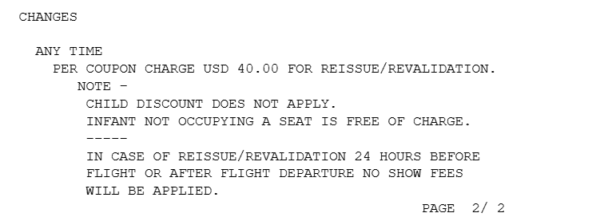
In airline ticketing and fare rules, misunderstanding how a penalty is applied can lead to major pricing errors. Terms like per sector, per coupon, per pricing unit, per combinable, per direction, and per ticket define the exact level where a change or refund fee is charged.
Knowing the difference is critical for GDS users, travel consultants, and airline pricing specialists. A small mistake in reading the fare rule can cost the agency hundreds of dollars in ADMs.
What Does “Per Sector” Mean?
Per Sector
Per sector means the fee is charged for each flight segment in the itinerary.
This is one of the most common reasons agents undercalculate penalties — they read “USD 50” and quote the passenger USD 50, forgetting it applies to each sector.
What Does “Per Coupon” Mean?
Per Coupon
Each flown segment generates one coupon on the e-ticket. Per coupon means the fee applies to every coupon on the ticket.
Per coupon and per sector often produce the same result — but they are not always identical. In some cases, a single sector can have multiple coupons (e.g., when a flight is codeshared or when there are multiple fare components), and vice versa.
What Is “Per Pricing Unit”?
Per Pricing Unit
A pricing unit is a complete fare construction — one-way, round-trip, circle trip, open-jaw, etc.
However, if the ticket includes two separately priced fares (e.g., two one-way fares combined on the same ticket), the fee applies to each unit individually.
What Does “Per Combinable” Mean?
Per Combinable
When two or more fare components are combined on one ticket, per combinable applies the fee to each fare component separately.
- EgyptAir fare: Refund fee USD 200
- Emirates fare: Refund fee USD 300
This is common in multi-carrier itineraries where each fare component carries its own penalty rules. Always check each component’s rule separately.
What Does “Per Direction” Mean?
Per Direction
A direction usually refers to outbound and inbound travel.
- Changing outbound only → USD 100
- Changing outbound + inbound → USD 200
This is one of the most passenger-friendly penalty structures for itineraries with multiple segments per direction, since the fee doesn’t multiply with each segment.
What Does “Per Ticket” Mean?
Per Ticket
This is the broadest level. The fee is charged once for the entire ticket, regardless of sectors or fare components.
Per-ticket penalties are the easiest to calculate and often the fairest from the passenger’s perspective — but they can also be the most expensive when the itinerary is short.
Fare Rule Structure Overview
Understanding this hierarchy prevents calculation errors during reissues and refunds.
Fare Rule Hierarchy
| Rule Level | Applies To | Multiplier |
|---|---|---|
| Per Ticket | Entire ticket | 1× |
| Per Pricing Unit | Each complete fare construction | Number of pricing units |
| Per Direction | Outbound and inbound separately | 1× or 2× |
| Per Combinable | Each combined fare component | Number of fare components |
| Per Coupon | Each coupon on the e-ticket | Number of coupons |
| Per Sector | Each flight segment | Number of sectors |
Why This Matters in Airline Pricing
Many penalty disputes happen because the level of application is misunderstood. A “small” per-sector fee can multiply quickly across multiple coupons.
For travel agents and GDS professionals, accurate interpretation of fare rules ensures:
- Correct quotations — no surprises for the passenger
- Proper reissue calculations — no ADMs for undercharging
- Transparent refund processing — no disputes at the counter
Frequently Asked Questions
What does “per sector” mean in airline fare rules?
What does “per coupon” mean in airline ticketing?
What is a “pricing unit” in airline fare rules?
What does “per combinable” mean in fare rules?
What does “per direction” mean in a fare rule?
What does “per ticket” mean in airline fare rules?
What is the hierarchy of airline fare rule levels?
Why do agents miscalculate airline change and refund fees?
📚 Related Guides
Master Fare Rule Levels and Avoid Costly ADMs
Create a free GDS HUB account and practise reading fare rules, calculating penalties and processing refunds in a simulated Amadeus, Galileo or Sabre environment — no live data, no risk.
Start Practising Free →